How to spot a fake esports tournament
Almost every entry-fee scam is one of four shapes, and most of them fail a ninety-second check. Here is the check — including the arithmetic nobody does.
The Fragnet team · Published 10 August 2026 · 10 min read
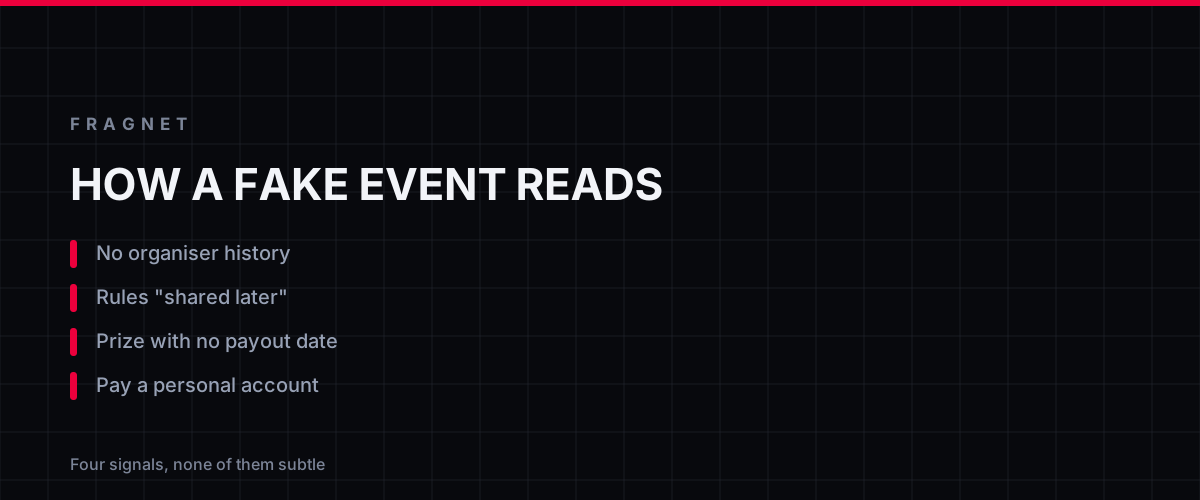
How we know this: These are the categories our own reporting flow uses — scam, fake listing, abuse, cheating, spam — and the signals a player can actually verify on a listing. We are also explicit about the limits of our own trust signals, because a platform that does not vet anyone should not pretend its badges mean more than they do.
Fragnet lists events. We don’t vet organizers, we never hold entry fees or prize money, and we have no brackets, results entry or leaderboards. Anything in this article about running an event assumes you own those parts.
The four patterns
1. Collect and vanish
An event is announced with a prize pool, entry fees are collected, and the organizer disappears before it starts — or runs it and disappears before paying. The tell is almost always the prize pool: it is large enough to attract entries and cannot be funded by them.
2. Moving goalposts
The event runs, someone wins, and the payout terms start changing. It becomes "after we reach 100 members", or "next month", or split differently than announced, or contingent on something never mentioned. Nothing was stolen at any single moment, which is what makes it effective.
3. The prize pool that was never funded
Not always malicious — sometimes an optimistic organizer expected 64 entries, got 20, and now owes a prize the fees cannot cover. The result for you is the same. This is why "how is the prize funded" is a fair question to ask before entering, not an accusation.
4. The impersonated brand
A brand name that echoes a real esports organisation closely enough to borrow its credibility. The listing looks professional because the logo was downloaded. Check whether the organisation itself has ever mentioned the event anywhere.
Red flags in the listing
- A prize pool the entry fees cannot fund, with no sponsor named.
- No stated payout method — just an amount.
- No stated payout timeframe. "Prizes will be distributed" is not a timeframe.
- Payment to a personal account whose name matches nothing else about the organizer.
- Urgency the slot counter contradicts: "only 3 slots left" on an event showing 40 remaining.
- Rules that are three lines long, or absent, on an event charging money.
- No rules about disputes at all, which means every dispute will be decided in the moment, by them.
Red flags in the organizer
- Zero completed events combined with an unusually large prize pool. Either signal alone is fine; together they are the single most reliable warning sign there is.
- A cluster of five-star reviews that all arrived the same day.
- Reviews that praise the organizer in general terms without describing an event.
- No presence anywhere outside a single Discord that was created recently.
- A brand name one character away from a well-known organisation.
The arithmetic test
This is the check almost nobody does, and it catches more than every other signal combined. Multiply the slots by the entry fee. Compare it to the advertised prize pool.
| Event | Max funding | Advertised prize | Verdict |
|---|---|---|---|
| 64 slots × $2 | $128 | $500 | Someone is subsidising $372. Ask who. |
| 25 squads × $8 | $200 | $150 | Plausible — organizer keeps $50. |
| 100 slots × $1 | $100 | $1,000 | Ten times the fee income. Ask hard. |
| 16 slots × $10 | $160 | $120 | Plausible. |
A gap is not proof of anything. Sponsors exist, and organizers do run events at a loss to build a reputation. But a gap is a question, and the answer tells you a lot. "A sponsor is covering it, here they are" is a good answer. Silence, or irritation at being asked, is also an answer.
Also check the other directionIf the fees massively exceed the prize, you are not looking at a tournament so much as a paid lobby. That is allowed and it should be obvious from the listing — but know which one you are entering.
The ninety-second check
- 1.Do the arithmetic above.
- 2.Read the rules. Length is a proxy for whether anyone has thought about disputes.
- 3.Find the payout method and timeframe. If they are not stated, that is your answer.
- 4.Open the organizer’s page. Events completed, rating, and what the reviews actually say — not the average.
- 5.Check they exist elsewhere: a Discord or stream link that leads somewhere populated.
- 6.Ask one direct question about payouts. How they respond is data.
Why a “verified” badge wouldn’t have saved you
The instinct after being scammed is to want verification. It is worth being clear about what verification on a platform like this could actually mean: that someone uploaded a document once. It would not establish that they can fund a prize pool, that they intend to pay it, or that the account is still controlled by the person who uploaded it.
Fragnet issues no verification badge, deliberately. A weak check that looks like a strong one is worse than none, because it moves your caution onto us without moving the risk. What we show instead is what we observed — events actually completed — and what players actually wrote.
If it has already happened
- 1.Screenshot everything now: the listing as it stands, the payment, and the messages where terms were agreed. Listings can be edited.
- 2.Report the listing or account. On Fragnet the categories are scam, fake listing, abuse, cheating and spam, and a human reads them.
- 3.Leave an honest, specific review. "Did not pay out the advertised prize, contacted three times" helps the next player; "scammer!!!" does not.
- 4.For real money, your payment provider is the route that can actually recover funds. A listing platform is not.
What a listing platform can and cannot doFragnet can remove a listing, remove an account, and act on a pattern of reports. It cannot recover your money, because it never held it. That is the direct trade-off of a platform that takes no cut, and it is worth knowing before you pay rather than after.
For honest organizers who keep getting mistaken for scammers
If you are new and legitimate, everything above is being applied to you, and it is not personal. Six things flip it:
- 1.Make your first event free. A completed free event is worth more than any claim you can make about yourself.
- 2.Write rules long enough to answer a dispute you have not had.
- 3.State the payout method, the split and the timeframe, including what happens on a tie.
- 4.Keep the prize pool inside what the fees fund, or name your sponsor.
- 5.Link a Discord or stream that has people in it.
- 6.Pay out fast and ask winners to review. The record is the only thing that compounds.
Common questions
- How can I tell if an esports tournament is legit?
- Check that the entry fees could plausibly fund the advertised prize, that the payout method and timeframe are stated, and that the organizer has completed events with reviews describing them. Most scams fail at least one.
- Is a new organizer a red flag?
- On its own, no — everyone starts somewhere. Combined with a large advertised prize pool it is the most reliable warning sign there is.
- Can Fragnet get my money back if I am scammed?
- No. We never hold entry fees or prize money, so there is nothing to return. We can remove the listing and the account, and act on patterns of reports.
- Why does Fragnet not verify organizers?
- Because a badge would imply a check we could not do well, and a weak check that looks strong transfers your caution to us without transferring the risk.
Read next
- Skins, UC and diamonds as tournament prizesHow organizers offer in-game currency and skins as prizes, how they are actually delivered, what publishers allow, and what to check before entering.
- Where to actually find tournaments you can enterMost "esports tournament" results are pro schedules you cannot enter. Where amateur, open-registration events actually get posted, ranked by game.
- A tournament rules template you can copy-pasteA complete rules template covering eligibility, conduct, disputes, no-shows, substitutes, fees and payouts — plus the clauses that stop arguments at 23:00.